New Haven Rotary Club Invited PED for a Healing Garden Talk
It would be nice to become refleshed by just attending a lunch time talk, would it not? And that was what we saw at the New Haven Rotary Club when Takaya gave another talk on “Healing Gardens and Japanese Gardens: Their Curious Relationship” . Although his talk is not the therapeutic
Healing Garden Talk at Cheshire Rotary Club, CT
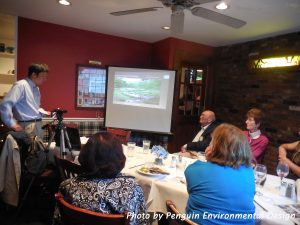
Takaya Kurimoto of PED presented a talk on “Healing Gardens and Japanese Gardens” at the Rotary Club meeting in Cheshire, Connecticut. There is a curious relationship between these two different gardens! If you want to know more about it, please contact us at info@pedarch.com . Thank you very much for members of
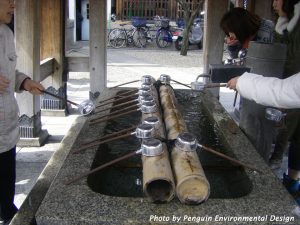
Mizuya- Where Water Purifies You and Your Tea Bowls
Some of you may know the Japanese term Mizuya (水屋), expressed with Chinese characters for “water” and “house”, as a type of Japanese kitchen chests. It is getting popular in New York and other metropolises. Yet did you realize that Mizuya initially had a quite different meaning? Mizuya originally referred to, and still could refer
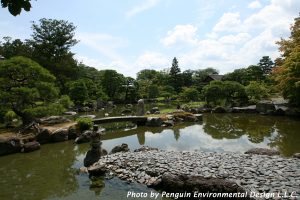
Sansui- Mountains and Water in Japanese Gardens
At our talk in April in New York, among a variety of questions we were happy to receive, there was an interesting one that could be called a linguestic question: “What does sansui (山水) mean? Does it mean nature or a garden?” In Japanese, san (山) means a mountain and
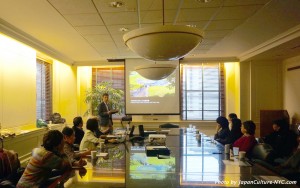
PED Discussed “Water in Japanese Gardens” at Nichibei Exchange
Takaya Kurimoto of PED presented a lecture on “Water in Japanese Gardens” at Nichibei Exchange in New York on April 28. Water is one of the most important elements in Japanese gardens. Even Japanese dry gardens have imaginary water. Takaya introduced some examples to illustrate the meaning and design of
New Haven Rotary Club Invited PED for a Healing Garden Talk
It would be nice to become refleshed by just attending a lunch time talk, would it not? And that was what we saw at the New Haven Rotary Club when Takaya gave another talk on “Healing Gardens and Japanese Gardens: Their Curious Relationship” . Although his talk is not the therapeutic
Healing Garden Talk at Cheshire Rotary Club, CT
Takaya Kurimoto of PED presented a talk on “Healing Gardens and Japanese Gardens” at the Rotary Club meeting in Cheshire, Connecticut. There is a curious relationship between these two different gardens! If you want to know more about it, please contact us at info@pedarch.com . Thank you very much for members of
Mizuya- Where Water Purifies You and Your Tea Bowls
Some of you may know the Japanese term Mizuya (水屋), expressed with Chinese characters for “water” and “house”, as a type of Japanese kitchen chests. It is getting popular in New York and other metropolises. Yet did you realize that Mizuya initially had a quite different meaning? Mizuya originally referred to, and still could refer
Sansui- Mountains and Water in Japanese Gardens
At our talk in April in New York, among a variety of questions we were happy to receive, there was an interesting one that could be called a linguestic question: “What does sansui (山水) mean? Does it mean nature or a garden?” In Japanese, san (山) means a mountain and
PED Discussed “Water in Japanese Gardens” at Nichibei Exchange
Takaya Kurimoto of PED presented a lecture on “Water in Japanese Gardens” at Nichibei Exchange in New York on April 28. Water is one of the most important elements in Japanese gardens. Even Japanese dry gardens have imaginary water. Takaya introduced some examples to illustrate the meaning and design of