Blog

Focusing on the Japanese Garden as a Healing Garden

It has long been observed that Japanese gardens and traditional architectural spaces offer profound psychological and physical healing effects for those who inhabit them. At PED, we are convinced that the essence of these restorative spaces can be integrated into modern architecture worldwide. We continue to conduct research to bridge these traditional wisdoms with contemporary design.

This year, an international symposium titled “Moving Boundaries,” centered on the theme of Human Health and the Future of Architecture, will be held in Kyoto in August and October. I am honored to announce that we will be participating as lecturers, Kawai in August, and I (Kurimoto) in October. We understand that many of the participants will be professionals from the architectural and medical fields.

As a Japanese garden designer, I will be presenting on the healing properties inherent in Japanese gardens. Collaborating with other lecturers in preparation for this event has been an incredibly stimulating experience for me.
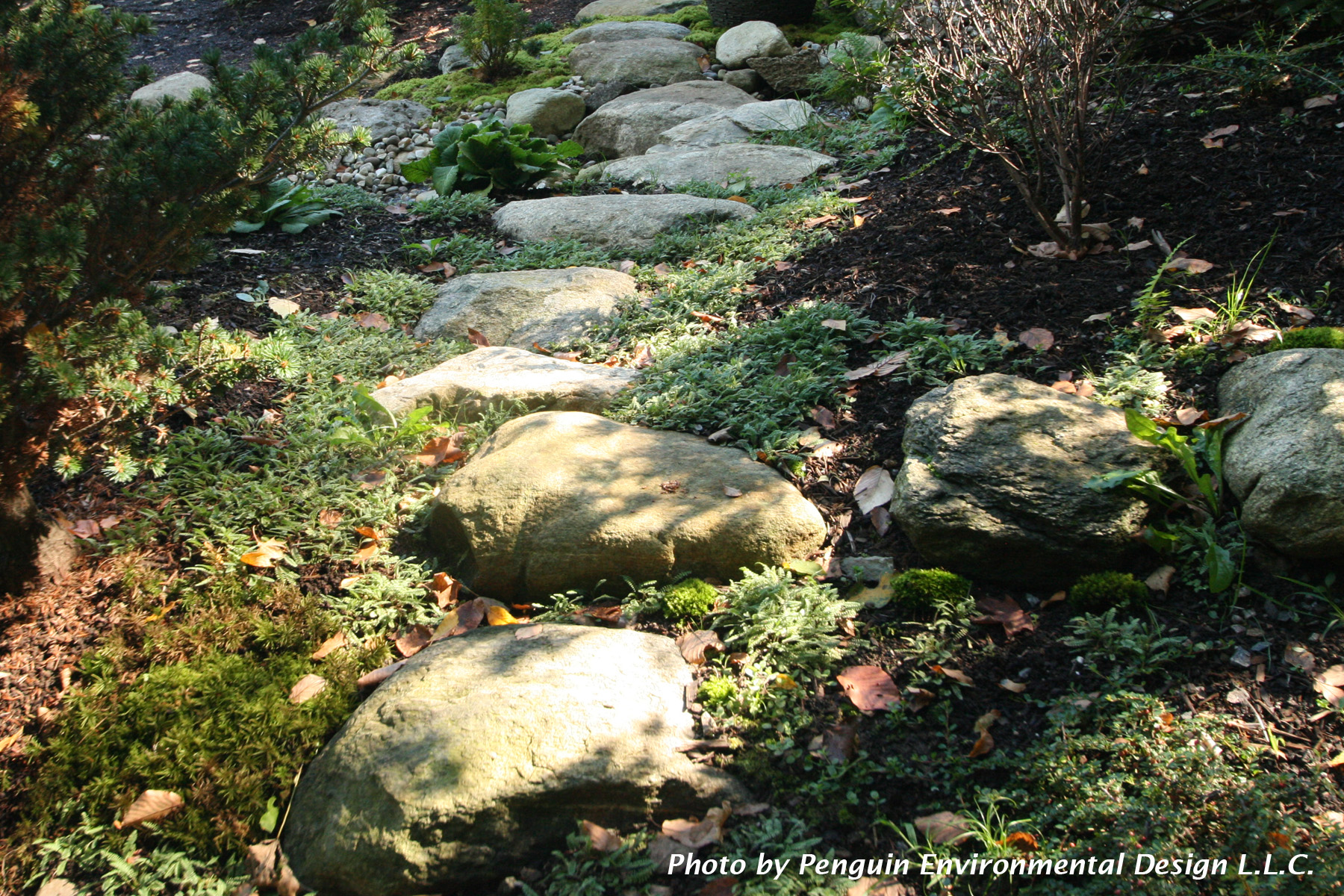
Meditative Walk: Calming the Walker’s Mind

In a previous blog post, “Meditative Walk,” I discussed how the design of stepping stones (nobedan and tobishi) in a Japanese garden can calm the walker’s mind. Interestingly, one of our fellow lecturers, Polish architect Natalia Olszewska, is conducting research on how the Roji (the tea garden path) affects the human psyche, utilizing neurophysiological research methods.

It is heartening to see such a growing global interest in the impact of Japanese architecture and gardens on human health. I am thrilled to connect with like-minded researchers and look forward to further uncovering the scientific reasons behind why these traditional Japanese spaces feel so profoundly “right” for the human spirit.

Follow us

Contact us

Penguin Environmental Design
56 Lynmoor Place, Hamden, CT 06517
info@pedarch.com

Blog

Focusing on the Japanese Garden as a Healing Garden

It has long been observed that Japanese gardens and traditional architectural spaces offer profound psychological and physical healing effects for those who inhabit them. At PED, we are convinced that the essence of these restorative spaces can be integrated into modern architecture worldwide. We continue to conduct research to bridge these traditional wisdoms with contemporary design.

This year, an international symposium titled “Moving Boundaries,” centered on the theme of Human Health and the Future of Architecture, will be held in Kyoto in August and October. I am honored to announce that we will be participating as lecturers, Kawai in August, and I (Kurimoto) in October. We understand that many of the participants will be professionals from the architectural and medical fields.

As a Japanese garden designer, I will be presenting on the healing properties inherent in Japanese gardens. Collaborating with other lecturers in preparation for this event has been an incredibly stimulating experience for me.

Meditative Walk: Calming the Walker’s Mind

In a previous blog post, “Meditative Walk,” I discussed how the design of stepping stones (nobedan and tobishi) in a Japanese garden can calm the walker’s mind. Interestingly, one of our fellow lecturers, Polish architect Natalia Olszewska, is conducting research on how the Roji (the tea garden path) affects the human psyche, utilizing neurophysiological research methods.

It is heartening to see such a growing global interest in the impact of Japanese architecture and gardens on human health. I am thrilled to connect with like-minded researchers and look forward to further uncovering the scientific reasons behind why these traditional Japanese spaces feel so profoundly “right” for the human spirit.
Follow us

Contact us

Penguin Environmental Design
56 Lynmoor Place, Hamden, CT 06517
info@pedarch.com

Japanese + Modern

Sign-up