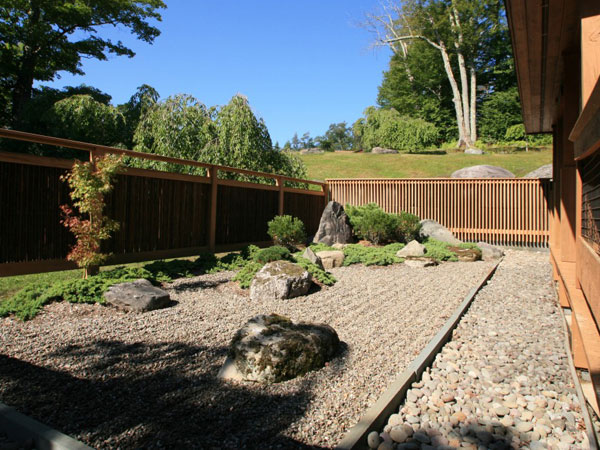
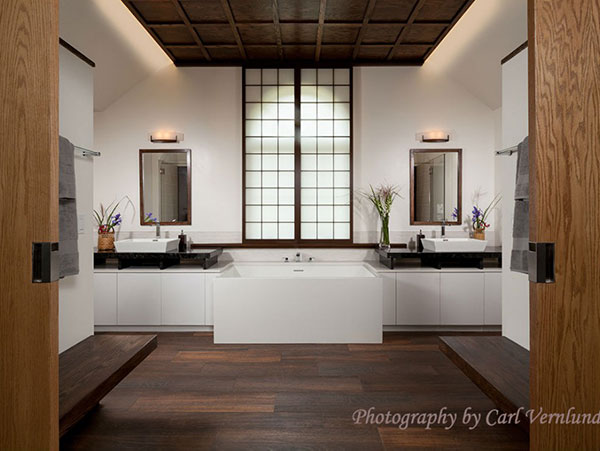
In the creation of Japanese gardens, there is a traditional technique known as Shakkei, or “borrowed scenery.” It is the art of incorporating the landscape beyond the property’s boundaries so seamlessly that it appears to be an integral part of the garden itself. However, this spatial manipulation—framing and capturing an outside view—is not unique to landscape design; it is also frequently employed in architecture through the strategic design of windows and openings.
I recently visited the Benesse House Museum on Naoshima, an island nestled in Japan’s Seto Inland Sea. Designed by Tadao Ando, the building features his signature raw, exposed concrete, yet it masterfully embraces the breathtaking scenery of the Setouchi region.
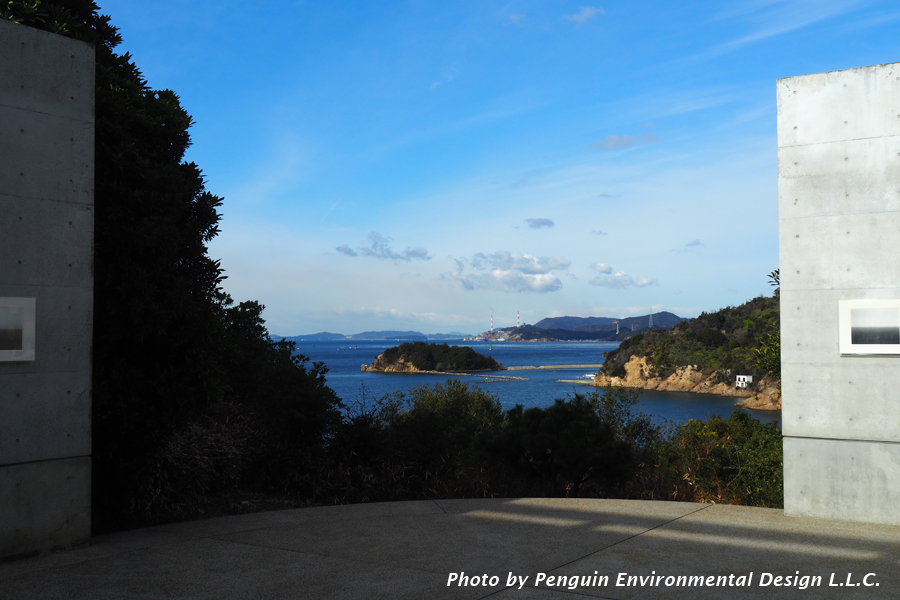
The courtyard shown in the photograph is a perfect example. Two massive concrete walls frame the Seto Inland Sea, transforming the natural landscape into a single, living painting. This is precisely the technique of Shakkei found in traditional Japanese gardens. The concrete walls themselves blend effortlessly as an extension of the architecture. In that sense, one could say the architecture itself is framing the landscape, or perhaps it is the courtyard doing the work.
Shakkei and Ikedori
Interestingly, traditional Japanese garden masters historically referred to this technique not just as Shakkei, but as Ikedori—literally meaning “capturing scenery alive.” The term implies capturing the essence of a magnificent view and weaving it into the garden without diminishing its natural grandeur. Looking out at the stunning vista of the Seto Inland Sea, the expression “capturing the scenery alive” feels personally far more fitting and resonant to me.
Another profound example on Naoshima can be found at the Art House Project’s Go’o Shrine. Here, artist Hiroshi Sugimoto designed the reconstruction of the shrine, creating an underground stone chamber connected to the main structure above. Visitors access this underground chamber through a narrow concrete passage, barely wide enough for one person. Walking through it, one is overcome by an eerie, visceral sensation—as if journeying from this world to the afterlife.
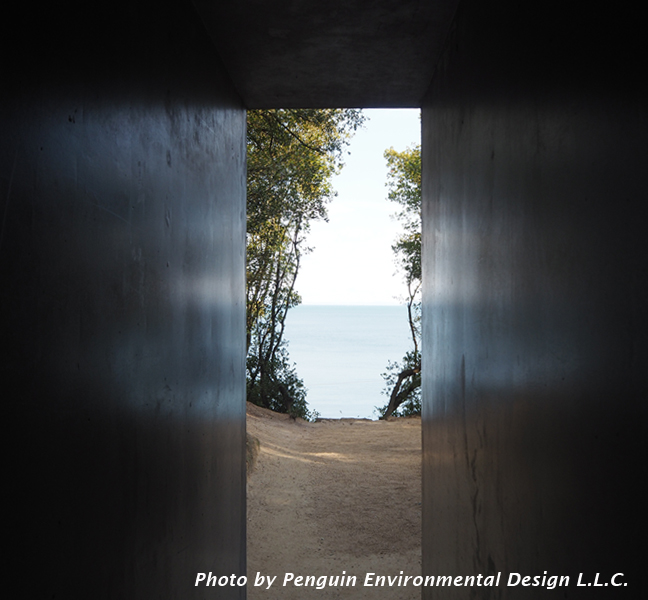
Yet, it is the return journey from the underworld back to the living—emerging from the dark underground tunnel—that delivers the masterstroke. As you walk toward the exit, you are greeted by the brilliant, shimmering sea framed perfectly at the end of the tree line. The sudden sight brings an overwhelming sense of relief. This narrative device is a highly effective, poetic manifestation of “capturing the landscape alive.”
Throughout history and across cultures, spatial designers—whether architects or landscape designers—have sought ways to connect human spaces with the broader landscape. This approach is not limited to pristine natural vistas; in some cases, the vibrant, everyday scenes of human life are borrowed and woven into modern buildings and gardens. Finding places where these thoughtful connections are made is one of my greatest joys, and it is an experience I hope everyone can begin to notice and appreciate.