Category: Landscape Architecture

Streets in Japan

I like walking lively shopping streets in Japan. Those streets look like toy boxes. Unexpected encounters wait for us. In October, I had a chance to walk on this kind of street in early morning. Then I noticed some points which many people do not pay attention to.
Read More »

Image of Quietness and of Japanese Space

What kind of images will you have in your mind when you hear the word, quiet? I have recently been reading the book “Quiet” by Susan Cain, which prompted me this question. My quick search of this word on Google Images showed me, as I thought it might, many images

Read More »

Cat’s Eye View of Japanese Architecture vol.3

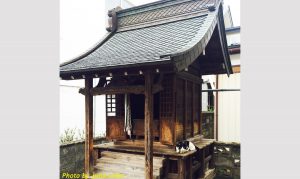
If you want to find cats in Japan, you would have the best luck by going to shrines and temples. Why? There are two reasons: One is that the shrine and temple grounds are “public” places where nobody stops you to come in, even if you are a cat. In fact,

Read More »

New Haven Rotary Club Invited PED for a Healing Garden Talk

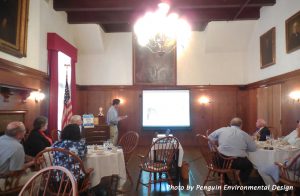
It would be nice to become refleshed by just attending a lunch time talk, would it not? And that was what we saw at the New Haven Rotary Club when Takaya gave another talk on “Healing Gardens and Japanese Gardens: Their Curious Relationship” .  Although his talk is not the therapeutic

Read More »

Category: Blog

The Itsukushima Shrine and the Many Meanings of Hashi

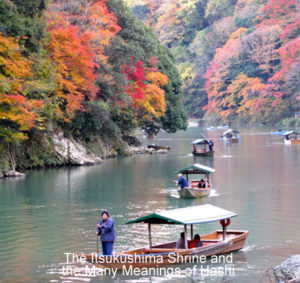
Hashi in motion A secondary concept of Ma is hashi. Generally, hashi means “edge.” The origin of this pronunciation of hashi comes from the Japanese word hashike, meaning a boat, or a barge. Therefore, saying the word hashi unconsciously carries an image of a boat moving between two borders. In this example,

Read More »
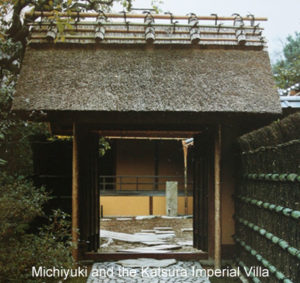
Michiyuki and the Katsura Imperial Villa

Michiyuki: Traveling and Beyond Being under water blurs the self/space boundary because you are always in motion. Michiyuki, the Japanese spatial concept for “moving self,” means traveling from once place to another. It specifically refers to the space you covered and the time you spent while traveling. But by translating

Read More »
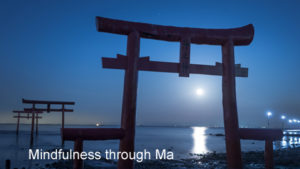
Mindfulness through Ma

More than a gate Another Japanese spatial concept that contributes to designing a mindful space is the boundary in motion. One of the Japanese words for this is Ma, which generally means “gap.” The Chinese character for Ma (間) represents a gate made out of two doors with the moonlight coming through.

Read More »
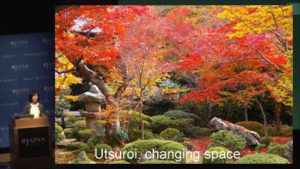
Utsuroi in Japanese Architecture and Landscape

Utsuroi: changing space Utsuroi, another Japanese spatial concept that causes the self/space boundary to blur, is present throughout Japanese architecture and gardens. Utsuroi means gradual and inevitable change from one state to another. It can also refer to reflection or projection of one thing onto another. Both meanings suggest that nothing

Read More »

Japanese + Modern

Sign-up