Blog

Sankirou: A Symbol of Mojiko’s Golden Age

Mojiko Port in Kitakyushu City has a storied history, having prospered for nearly half a century after being designated a special national export port in 1889. However, following World War II, the opening of the Kanmon Tunnel and the Shinkansen bypassing Moji led to the town’s decline. In recent years, based on the 1987 “Mojiko Retro” initiative, historical buildings have been preserved, and the area has once again become a bustling tourist destination.

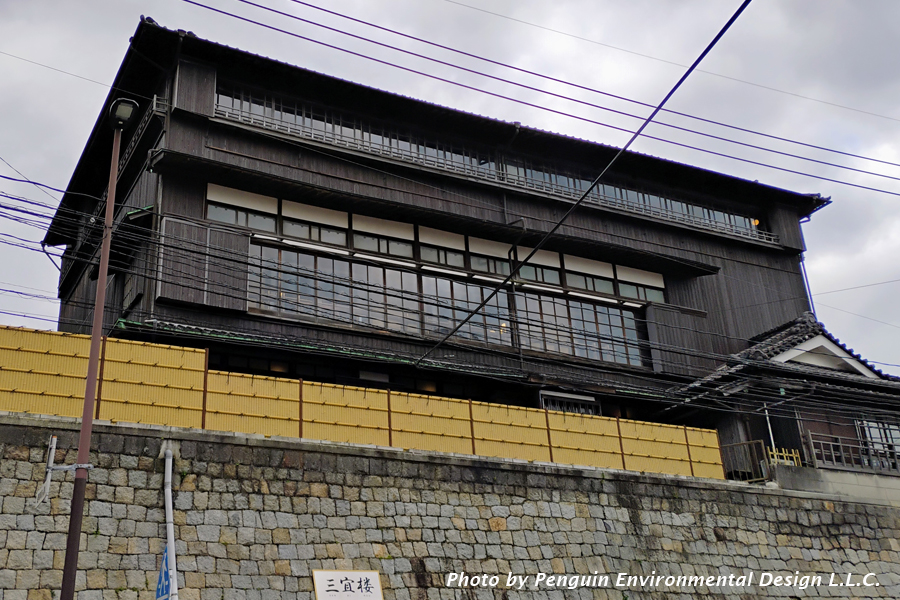
While the red-brick structures—such as the Old Moji Customs and the Old Osaka Shosen building—capture the charm of the port’s functional heyday, I would like to introduce the building that left the strongest impression on me: a former high-end restaurant (ryotei) called Sankirou.
Sankirou: Architectural Opulence

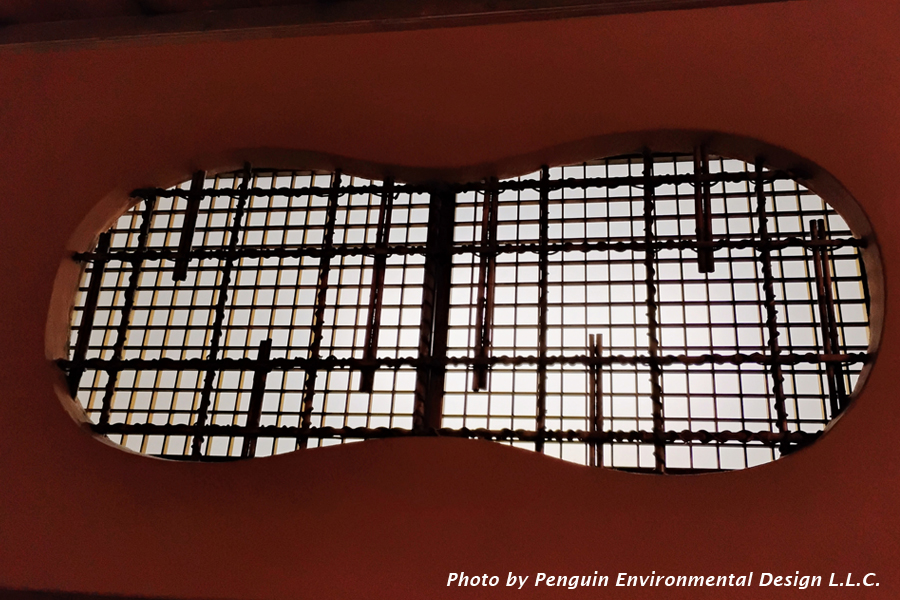
It is said to be the largest three-story wooden structure in Kyushu. It boasts a grand 100-tatami banquet hall and two telephone rooms, which were a rare luxury at the time of its construction. It even featured a service elevator to transport cuisine to the upper floors. Most noteworthy is the extraordinary attention to detail in its design: there are 15 different styles of shitaji-mado (bamboo-lattice windows) alone, and the lighting designs are truly exceptional.
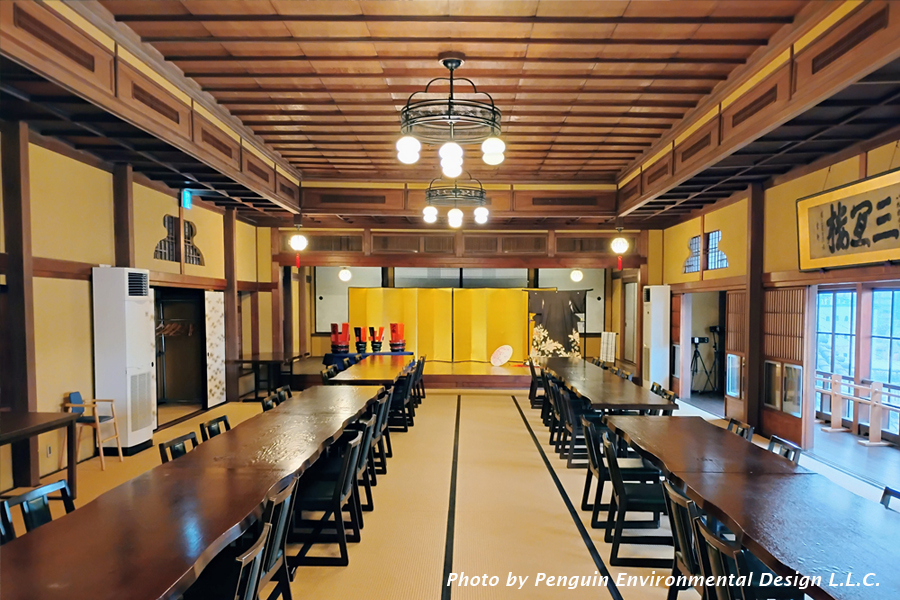
The architectural opulence is almost unimaginable given the current state of the town, yet it speaks volumes about the immense prosperity Moji once enjoyed. Following the town’s decline, the restaurant closed its doors and reportedly sat in ruins for a time. However, through the dedicated efforts of local volunteers, an extensive restoration was undertaken. Lighting fixtures and other details were recreated from scratch based on surviving historical documents, and the retaining walls were seismically reinforced. Today, the building is managed by Kitakyushu City. Though it may lack the extravagant flair of its peak, it now hosts tenants where visitors can enjoy fugu (pufferfish) cuisine. I was deeply moved to see that a structure so cherished by the local community has managed to survive.
From the third-floor rooms, you can look down over Mojiko Port. The famous poet Takahama Kyoshi once stayed here, leaving behind a poem in a room with a magnificent view. Standing in that very space, I felt as though I had slipped back in time.

Follow us

Contact us

Penguin Environmental Design
56 Lynmoor Place, Hamden, CT 06517
info@pedarch.com

Blog

Sankirou: A Symbol of Mojiko’s Golden Age

Mojiko Port in Kitakyushu City has a storied history, having prospered for nearly half a century after being designated a special national export port in 1889. However, following World War II, the opening of the Kanmon Tunnel and the Shinkansen bypassing Moji led to the town’s decline. In recent years, based on the 1987 “Mojiko Retro” initiative, historical buildings have been preserved, and the area has once again become a bustling tourist destination.

While the red-brick structures—such as the Old Moji Customs and the Old Osaka Shosen building—capture the charm of the port’s functional heyday, I would like to introduce the building that left the strongest impression on me: a former high-end restaurant (ryotei) called Sankirou.

Sankirou: Architectural Opulence

It is said to be the largest three-story wooden structure in Kyushu. It boasts a grand 100-tatami banquet hall and two telephone rooms, which were a rare luxury at the time of its construction. It even featured a service elevator to transport cuisine to the upper floors. Most noteworthy is the extraordinary attention to detail in its design: there are 15 different styles of shitaji-mado (bamboo-lattice windows) alone, and the lighting designs are truly exceptional.

The architectural opulence is almost unimaginable given the current state of the town, yet it speaks volumes about the immense prosperity Moji once enjoyed. Following the town’s decline, the restaurant closed its doors and reportedly sat in ruins for a time. However, through the dedicated efforts of local volunteers, an extensive restoration was undertaken. Lighting fixtures and other details were recreated from scratch based on surviving historical documents, and the retaining walls were seismically reinforced. Today, the building is managed by Kitakyushu City. Though it may lack the extravagant flair of its peak, it now hosts tenants where visitors can enjoy fugu (pufferfish) cuisine. I was deeply moved to see that a structure so cherished by the local community has managed to survive.

From the third-floor rooms, you can look down over Mojiko Port. The famous poet Takahama Kyoshi once stayed here, leaving behind a poem in a room with a magnificent view. Standing in that very space, I felt as though I had slipped back in time.

Follow us

Contact us

Penguin Environmental Design
56 Lynmoor Place, Hamden, CT 06517
info@pedarch.com

Japanese + Modern

Sign-up